But "well enough" has a cost. The gap between what a traditional landline delivers and what a modern VoIP phone system provides has grown considerably, in terms of features, flexibility, and monthly expenditure. For growing businesses, that gap matters.
Key Takeaways:
Sticking with "well enough" has a hidden cost.
Most businesses don't realise how much they're missing out on until they compare it to VoIP. It can save money, offer more features, and more flexibility that a landline simply can't match.
Your business number is no longer tied to one location.
With VoIP, calls can be answered from a desk phone, a mobile app, or a laptop. This makes remote and hybrid teams easy to manage under one system.
Growing your team no longer means new hardware or engineer visits.
Adding a user on VoIP takes minutes, not days. This makes scaling faster and cheaper compared to a traditional phone system.
What Is a VoIP Phone?
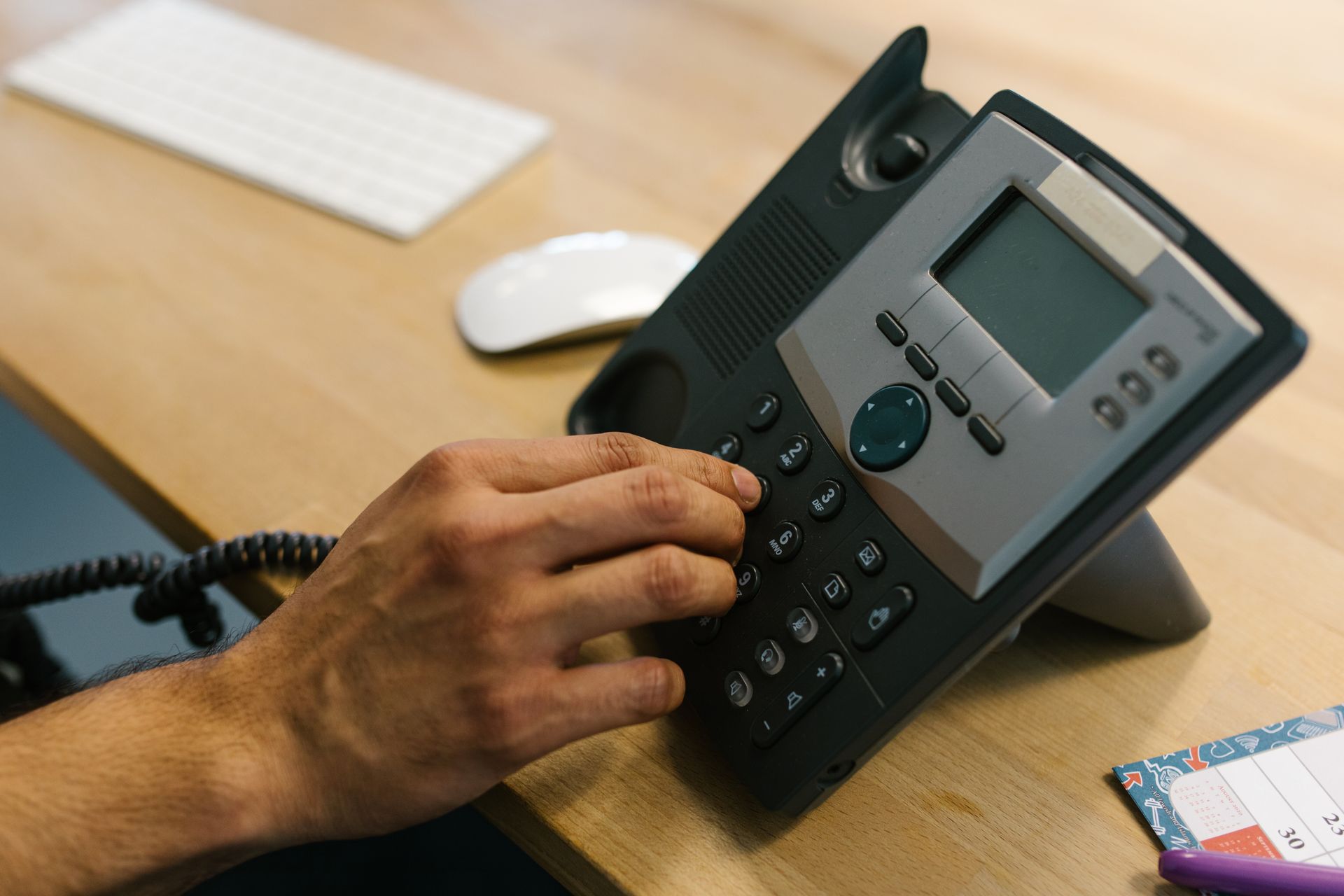
VoIP stands for Voice over Internet Protocol. VoIP Phone enables you making and receiving calls over your broadband connection rather than through traditional copper telephone lines.
A VoIP phone looks like a standard desk phone, has the same handset, same keypad, same display — but instead of connecting to a phone socket in the wall, it connects to your internet router or network switch. The call travels as data over your internet connection rather than through the public telephone network.
The result is lower call costs, more flexibility, and access to a range of features that traditional landlines either cannot support or charge significant premiums to provide.
How Does VoIP Calling Work?
When you make a call on a VoIP phone system, your voice is converted into digital data packets, transmitted over your internet connection, and reassembled at the other end. The process happens in milliseconds and, on a reliable broadband connection, is indistinguishable from a traditional phone call in terms of audio quality.
Each concurrent VoIP call requires approximately 100 Kbps of upload and download bandwidth. For most Irish SMEs already using cloud tools, video conferencing, and file sharing. So standard business broadband handles these tasks without difficulty.
VoIP Phones vs Traditional Landlines: The Key Differences
The differences between a VoIP system and a traditional landline go beyond call costs, though cost is often where the conversation starts.
Call costs — VoIP solutions can offer more flexible pricing structures and may reduce communication costs depending on your provider and usage requirements. Local calls over VoIP are often included in a flat monthly fee.
Infrastructure — a traditional phone system requires a physical PBX (Private Branch Exchange) unit on-site, dedicated phone lines, and regular maintenance. Cloud-based VoIP reduces the need for on-site phone system maintenance and allows many changes to be managed remotely.
Flexibility — VoIP is not tied to a physical location. Your team can take calls on desk phones, mobile apps, or laptop softphone applications using the same business number from any location with an internet connection.
Scalability — adding a new user to a traditional phone system can mean new hardware, new lines, and an engineer visit. Adding a user to a VoIP for small businesses takes minutes and costs only the additional per-user licence.
Features — auto attendants, call queues, ring groups, voicemail to email, call recording, and real-time analytics are all standard on a modern VoIP platform. On a traditional system, these either require expensive add-ons or are simply unavailable.
Quick Comparison:
Who Uses VoIP Phones in Ireland?
SME VoIP adoption has grown consistently across every sector of Irish business — and the range of organisations using it reflects how widely applicable the technology has become.
Professional services firms use VoIP for its call recording and compliance features.
Retail businesses use it to route calls across multiple locations under one system.
It’s used in clinics and by healthcare providers to organise call handling so that each appointment, billing question and urgent call is routed to the right person.
Start-ups are using it because it gives them a professional phone presence from day one, without the capital expenditure on hardware.
Remote and hybrid working has also driven adoption significantly. A team split between a Dublin office, home workers in Cork, and a site manager in Galway can all operate under one phone system, sharing extensions and call handling rules as if they were in the same building.
Is VoIP Right for Your Business?
For most Irish businesses, the answer is yes. But the question is usually 'when' rather than 'whether'.
If your current phone system is tied to a physical office, charges separately for each line, makes it difficult to add new users, or leaves remote workers relying on personal mobile numbers for business calls, a VoIP phone system in Ireland addresses all of those issues directly.
The setup process is straightforward. A reputable Irish VoIP provider handles the configuration including call flows, extensions, voicemail, user profiles and can port your existing business number across so there is no disruption to incoming calls.
Implementation times vary depending on business requirements, but many VoIP migrations can be completed efficiently with professional support.
Pulse Telecom — Best VoIP Phone Systems Provider for Irish SMEs
Pulse Telecom is an Irish-owned VoIP phone system provider based in Dublin, supporting SMEs and enterprise teams across Ireland.
We provide Ireland-based support;
GDPR-compliant infrastructure;
99.99% network uptime;
Offer full range of compatible Yealink hardware.
Pulse provides everything a growing Irish business needs to move to modern cloud telephony, without the complexity. Contact us on +353 1 862 3300 or visit pulse.ie to request a quote.
You May Also Like: